Most business owners receive financial statements every month.
Very few actually use them.
It’s not because the reports aren’t important. It’s because they’re not always presented in a way that makes them useful.
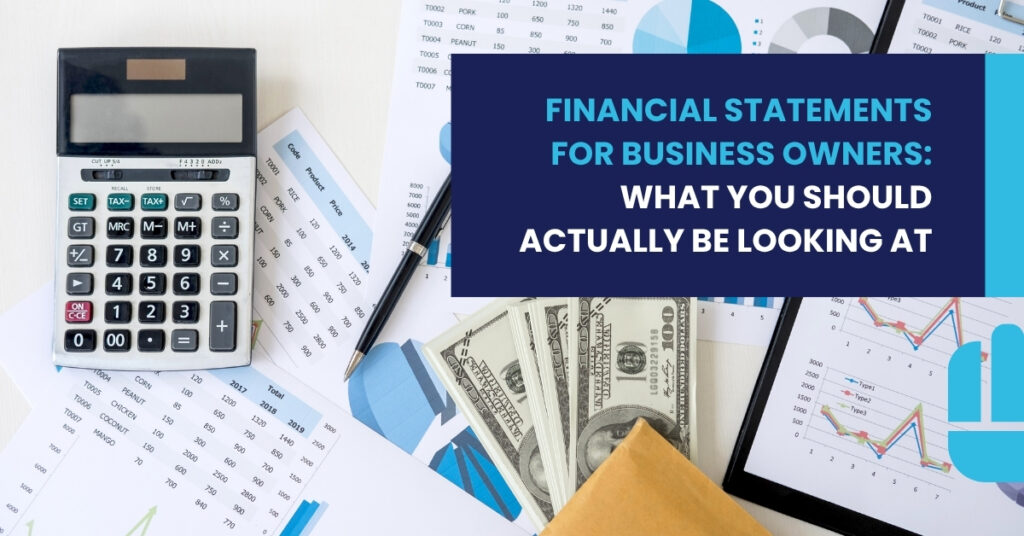
The Profit and Loss statement, for example, is often the first place people look. Revenue, expenses, and profit are all there. But without context, those numbers don’t tell you much. A profitable month doesn’t necessarily mean strong cash flow. A drop in expenses might look positive until you realize it’s tied to something that was simply delayed.
The Balance Sheet is even more misunderstood. It shows what the business owns and owes at a specific point in time, but many business owners don’t spend much time reviewing it. That’s where issues tend to hide. Loan balances that don’t match expectations, tax liabilities that have built up quietly, or accounts receivable that haven’t been collected.
The challenge is not the reports themselves. It’s the connection between the reports and the underlying bookkeeping.
If the numbers are not consistent, the reports become harder to interpret. If accounts are not fully reconciled, balances may not reflect reality. If transactions are categorized incorrectly, trends become misleading.
When bookkeeping is structured properly, financial statements become easier to work with. You don’t need to analyze every line. You can focus on a few key areas and trust that the underlying data is accurate.
Revenue trends become meaningful because they are consistent. Expense categories can be compared month to month without adjustments. Cash flow can be understood in relation to profit, rather than treated as a separate issue.
This is where financial statements start to serve their purpose. They don’t just show what happened. They help explain why it happened and what needs attention.
For most business owners, the goal is not to become an expert in accounting. It’s to be able to look at the numbers and have a clear sense of where the business stands.
That clarity depends less on the reports themselves and more on how well the system behind them is maintained.
If the system is reliable, the reports become useful.
If it isn’t, they become something you receive but don’t fully trust.
Book a free Diagnostic
https://transcounts.com/services/bookkeeping/