
Table of Contents
Navigating PST Filing in Vancouver, British Columbia
For small businesses in Vancouver, British Columbia, mastering PST filing in Vancouver, British Columbia is crucial to staying compliant amid the city’s bustling e-commerce and startup scene. The Provincial Sales Tax (PST) ensures fair revenue collection while supporting local infrastructure, but errors can lead to hefty penalties. As a Vancouver-based accounting firm, Transcounts helps entrepreneurs navigate these requirements with ease.
PST is a 7% tax applied to most taxable goods and services sold in British Columbia, distinct from federal taxes like GST/HST. Businesses exceeding sales thresholds must complete PST registration BC to collect and remit the tax. In Vancouver’s dense urban market, considerations include high-volume transactions from online sellers and contractors dealing with local sales nuances. For those handling related federal obligations, Gst Hst Filing Vancouver provides essential support in the broader BC tax landscape, ensuring comprehensive compliance for provincial sales tax reporting in BC.
Filing occurs through eTaxBC, British Columbia’s secure online tax portal, with returns due monthly or quarterly depending on sales volume–key for timely PST return BC submissions. Official guidelines note that over 90% of returns are filed online via eTaxBC, highlighting its efficiency and reducing errors. Vancouver e-commerce sellers, for instance, benefit from streamlined processes to avoid fines. Transcounts integrates QuickBooks and Xero to automate provincial sales tax reporting in BC, offering expert guidance for BC sales tax compliance for Vancouver businesses and building confidence in tax management.
Understanding PST Requirements in British Columbia
Navigating provincial sales tax obligations is essential for businesses operating in British Columbia, particularly in vibrant markets like Vancouver. This section explores the core elements of PST registration, helping entrepreneurs understand when and how to comply. For those involved in PST filing in Vancouver, British Columbia, early awareness of these requirements can streamline operations and avoid costly penalties.
PST Registration Basics in BC
PST registration in BC is a key step for businesses selling taxable goods and services within the province. Under BC guidelines, companies must register if their annual taxable sales exceed $10,000, as outlined in official provincial resources. Taxable sales include items like furniture, electronics, and certain services, excluding exempt categories such as groceries or prescription drugs.
Mandatory registration applies once the threshold is met, but voluntary options exist for businesses below it who anticipate growth or prefer to claim input tax credits. Required information includes a Business Number (BN) from the Canada Revenue Agency, estimated sales projections, and details on business structure. Non-residents selling into BC may also need to register if they meet the criteria. For Vancouver enterprises, this process, often called BC provincial tax signup, ensures compliance from the start. Timelines are straightforward: registration becomes effective within 30 days of application, per provincial guidelines. Transcounts offers specialized onboarding support to guide businesses through this, making the transition smoother for local startups.
Thresholds and Exemptions for Vancouver Businesses
Understanding thresholds is crucial for assessing PST obligations. The $10,000 annual taxable sales threshold triggers mandatory registration in BC; for example, an e-commerce seller in Vancouver shipping $12,000 worth of taxable clothing over a year would qualify. Calculate this by tracking sales of non-exempt items, subtracting any zero-rated exports.
Common exemptions include sales to other GST/PST registrants, exported goods, and specific sectors like agriculture or health services. Vancouver businesses, especially startups in tech or e-commerce, benefit from nuances like multi-jurisdictional rules: sales to BC customers count toward the threshold even if fulfilled from outside the province. Voluntary registration below the limit suits growing firms wanting to recover taxes paid on purchases. For Vancouver sales tax enrollment, exemptions help small operations focus on exempt digital services or resale items. These rules address common queries on PST registration requirements in Vancouver, empowering businesses to self-assess accurately and plan for expansion without surprises.
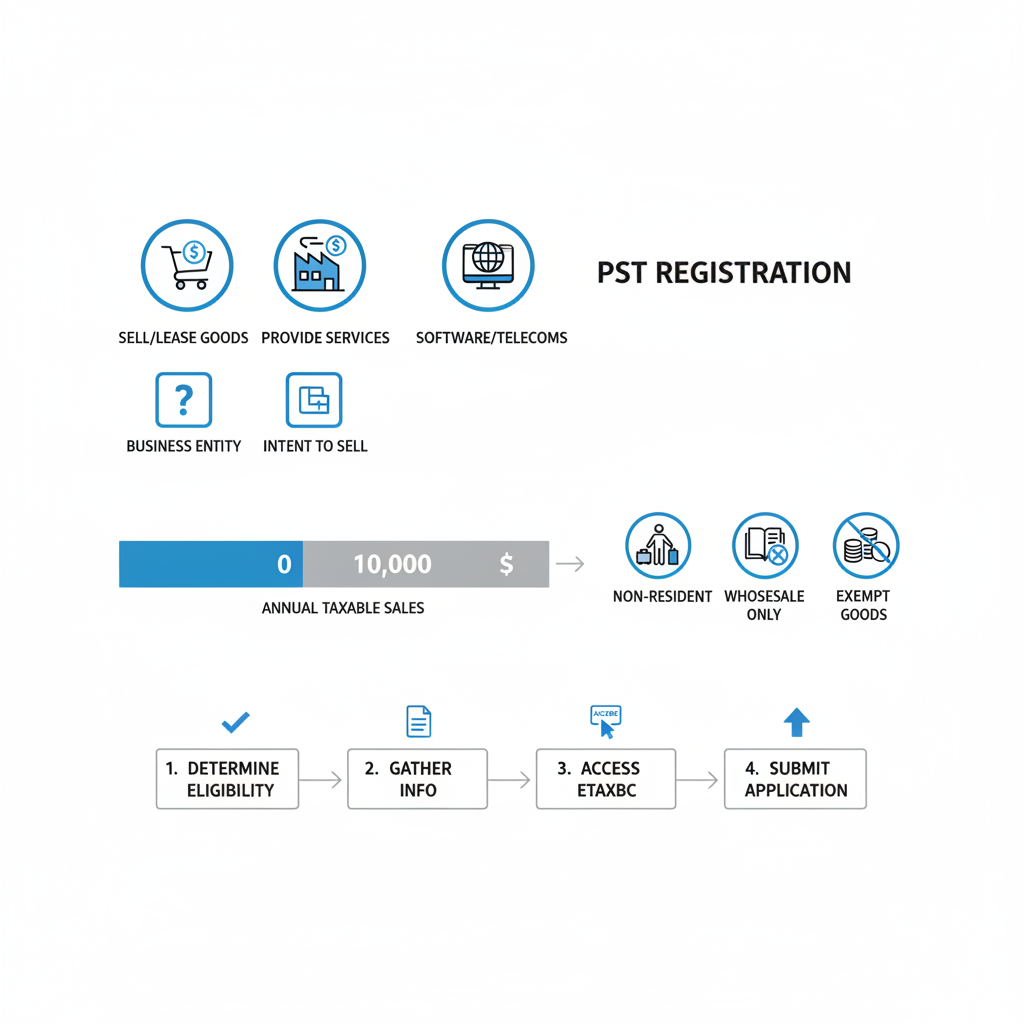
PST requirements and registration process in British Columbia
This visual overview reinforces how thresholds and exemptions apply practically, aiding Vancouver entrepreneurs in navigating these rules.
Steps to Complete PST Registration Online
Registering for PST in BC is streamlined through the eTaxBC online portal, a user-friendly tool for efficient setup. Begin by gathering essentials: your BN, business address, estimated annual taxable sales, and banking details for remittances. Access the portal via the official BC government website and create an account if needed.
Follow these steps:
- Log in to eTaxBC and select the PST registration option.
- Enter business details, including sales projections and exemption claims.
- Review and submit the application; approval typically occurs within 30 days.
- Upon success, receive your PST account number for future filings.
This process, detailed in the Register for PST guidelines, takes about 20-30 minutes for prepared applicants. For small businesses in BC, it’s a straightforward way to initiate compliance. Post-registration, businesses handle PST return BC submissions quarterly or annually, depending on volume. Integrating tools for post-registration tracking, such as Sales Tax Reconciliation Vancouver, ensures accurate reporting and ties into broader tax strategies. Early registration not only meets obligations but positions companies for growth advantages, like seamless integration with services from firms like Transcounts.
Benefits of Proper PST Compliance
Adhering to Provincial Sales Tax (PST) requirements offers substantial advantages for businesses in British Columbia, particularly through proper PST filing in Vancouver, British Columbia. This compliance not only safeguards financial stability but also boosts operational efficiency and fosters sustainable growth for small and medium-sized enterprises. By integrating accurate tax processes, local firms can avoid costly pitfalls while unlocking provincial sales tax advantages for local firms, such as improved cash flow and eligibility for refunds or credits.
Avoiding Penalties and Interest in BC
Non-compliance with PST regulations in British Columbia can lead to severe financial repercussions, including penalties of 10% of the tax due plus accruing interest, as outlined in the Small Business Guide to PST. For Vancouver-based businesses, especially seasonal retailers, failing to remit taxes on time might result in fines up to $10,000, disrupting cash flow during peak periods like holiday sales. Timely filing protects against these risks, ensuring steady liquidity for reinvestment and expansion.
One key BC tax adherence perk is enhanced cash flow forecasting, allowing firms to predict obligations accurately and allocate resources effectively. Consider a Vancouver contractor handling construction materials; without proper adherence, overlooked taxes on taxable supplies could trigger audits and additional charges. By prioritizing compliance, such businesses maintain uninterrupted operations and avoid the compounding interest that erodes profits. The guide emphasizes that proactive strategies, like quarterly reviews, prevent these issues, saving companies from unnecessary financial strain and supporting long-term viability in a competitive market.
Streamlining Operations with Accurate Reporting
Organized PST processes significantly enhance efficiency, particularly for e-commerce sellers and startups leveraging cloud-based tools in Vancouver. Accurate reporting reduces administrative burdens, with businesses saving up to 20% on admin time according to the Small Business Guide to PST. This efficiency stems from automated systems that handle calculations and submissions seamlessly, minimizing errors in PST return BC filings.
For growing enterprises, integrating compliant workflows means faster month-end closes and better inventory management. Startups using platforms like QuickBooks can automate tax tracking for online sales, eliminating manual reconciliations that often lead to delays. In Vancouver’s dynamic tech scene, this streamlined approach allows teams to focus on core activities, such as product development, rather than chasing paperwork. Moreover, precise reporting unlocks credits for overpaid taxes, further optimizing resource use and enabling scalable growth without operational hiccups.
Enhancing Business Credibility and Growth
Proper PST compliance bolsters a business’s reputation, making it more attractive to investors, partners, and auditors in the Vancouver market. Well-maintained records demonstrate reliability, facilitating smoother audits and reducing scrutiny from provincial authorities. This preparedness ties directly into PST registration BC, where initial setup ensures ongoing adherence and positions firms for expansion opportunities.
A Vancouver contractor, for instance, leveraged compliant tax practices to secure a major partnership, showcasing how adherence supports bundled service offerings like construction and consulting. Beyond audits, it improves investment pitches by providing clear financials for due diligence. For broader support, exploring canadian sales tax services can integrate federal and provincial obligations effectively, enhancing overall strategy.
Key pros include:
- Improved eligibility for business loans through transparent reporting.
- Stronger vendor relationships via reliable payment histories.
- Accelerated growth by mitigating risks in competitive bids.
These elements collectively drive credibility, inspiring confidence among stakeholders and paving the way for sustainable success in British Columbia’s economy.
Step-by-Step PST Filing Process
For businesses engaged in PST filing in Vancouver, British Columbia, mastering the process ensures compliance and smooth operations. This BC sales tax submission guide outlines the essential steps, from gathering data to final confirmation, helping Vancouver enterprises stay on top of their obligations. Whether you’re new to provincial sales tax or refining your routine, following these steps minimizes errors and maximizes efficiency.
Preparing Your PST Return Data
Start by organizing your records meticulously. Collect all invoices and receipts from the reporting period, typically quarterly or annually, to track taxable sales accurately. Categorize items into taxable, exempt, and zero-rated goods, as required for British Columbia reporting. For instance, an e-commerce seller in Vancouver should review sales logs to identify PST-applicable transactions, such as furniture or software, while noting exemptions for groceries or exported items.
Next, calculate totals using Form PST-101 guidelines from the official PST Return Guide. Enter total taxable sales on line 101, subtract any exemptions or credits, and compute the tax owed. Common pitfalls include overlooking input tax credits for business purchases, so double-check calculations to avoid underreporting. Maintain digital backups for easy retrieval during audits.
If managing this feels overwhelming, consider professional support through vancouver small business accounting services. These experts can streamline data preparation, integrating tools like QuickBooks for accurate categorization and reducing the risk of errors in your PST return BC preparation.
Using eTaxBC for Online Submission
Access eTaxBC by logging in with your PST registration BC credentials, obtained during initial account setup. This platform simplifies the process for eTaxBC filing for Vancouver enterprises, offering a secure interface for submissions. Navigate to the PST section, select your reporting period, and input data from your prepared Form PST-101.
Follow these numbered steps for seamless entry: 1) Verify account details and upload supporting documents if prompted. 2) Enter sales totals, exemptions, and tax amounts, ensuring alignment with the PST Return Guide’s instructions. 3) Review for validation errors, such as mismatched totals, and correct them on-screen. For an e-commerce example, upload transaction exports from your platform to populate fields automatically.
Once entered, preview the return to confirm accuracy. The system flags issues like incomplete fields, helping you comply with online PST filing BC standards. Submit electronically for immediate processing, saving time compared to paper methods. If errors persist, refer to the Online PST Filing resource for troubleshooting tips, such as resetting sessions or contacting support.
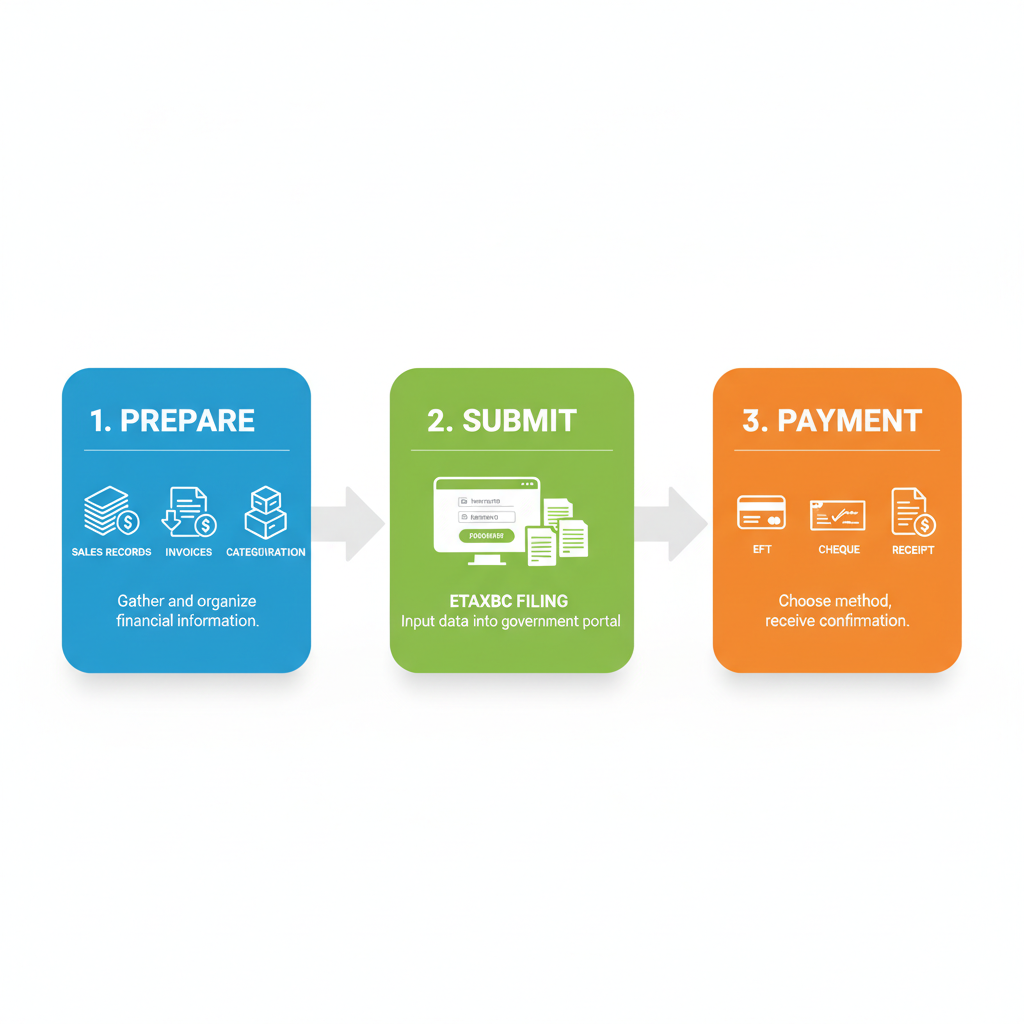
Step-by-step PST filing process using eTaxBC for submission and payment
This visual overview reinforces the workflow, ensuring you don’t miss key stages in your routine.
Payment Options and Confirmation
After submission, proceed to remittance using eTaxBC’s integrated tools. Choose electronic funds transfer (EFT) for quick processing or mail a cheque if preferred, adhering to due dates to avoid penalties. For businesses with high volumes, EFT links directly to your bank, automating payments and providing instant receipts.
Confirm your filing by downloading the acknowledgment from eTaxBC, which includes your return summary and payment verification. Retain these records for at least six years, as mandated for audits. Post-filing, update your accounting software to reflect the transaction, maintaining ongoing compliance.
Watch for confirmation emails outlining next steps, and address any discrepancies promptly. Common issues, like delayed payments, can be resolved via the platform’s help center. By following this PST return BC process diligently, Vancouver businesses ensure financial accuracy and peace of mind.
Transitioning from filing, focus on best practices to optimize your tax strategy moving forward.
Best Practices for PST Management
Effective PST filing in Vancouver, British Columbia, requires a structured approach to ensure compliance and minimize risks for local businesses. By adopting optimized BC tax practices, companies can streamline their processes and avoid costly penalties. This section outlines key strategies for deadlines, automation, records, and support to help businesses maintain smooth operations.
Meeting Deadlines and Using Automation
Timely PST return BC submissions are crucial, with deadlines typically set for the 20th of the month following the reporting period for monthly filers or the last day of the second month after the quarter for quarterly ones, as outlined in the Report and Pay PST guidelines. Missing these can result in interest charges up to 10% annually. To stay on track, businesses should use digital calendars synced with reminders for each filing cycle.
Automation tools play a vital role in simplifying these tasks. For e-commerce sellers in Vancouver, integrating platforms like A2X with QuickBooks or Xero can automate sales tax calculations and reconciliations, reducing manual errors. According to official resources, e-filing reduces errors by 50%, making it an essential step for efficient PST management in British Columbia. Pro tip: Set up automated alerts for tourist exemptions during peak seasons to adjust rates accurately without overhauling your system. A nonprofit example involves scheduling quarterly reviews to align with donation-driven sales spikes, ensuring seamless compliance.
Record-Keeping and Audit Preparation
Maintaining accurate records is foundational for PST registration BC and ongoing compliance. Businesses must retain detailed invoices, receipts, and exemption certificates for at least six years in digital formats to facilitate easy access during reviews. Implement a checklist: categorize transactions by taxable and exempt items, log exemption claims with supporting documentation, and reconcile monthly with bank statements.
Audit triggers often include discrepancies in reported versus actual sales or high refund rates, so proactive preparation is key. Vancouver PST optimization tips include using cloud-based storage for secure, searchable records that comply with provincial standards. Regularly cross-verify entries to catch inconsistencies early. For instance, a local agency might digitize vendor contracts to quickly demonstrate tourist refund eligibility. This approach not only aids audits but also supports internal financial planning, fostering long-term optimized BC tax practices.
Seeking Professional Assistance in Vancouver
For complex scenarios like high-volume sales or multi-jurisdictional operations, outsourcing becomes essential. Businesses should seek experts when transaction volumes exceed 500 monthly or during expansions involving PST registration BC updates. Vancouver accounting services like Transcounts offer tailored bundles combining payroll and tax compliance, integrating tools such as TaxJar for automated filings.
Leverage professionals for audit defense and strategic advice, especially in Vancouver’s diverse sectors like tech startups and nonprofits. Transcounts, for example, helped a local e-commerce firm reduce filing time by 40% through their automated reconciliation services, including handling tourist exemptions efficiently. Start by assessing your needs: if internal resources are stretched, a consultation can provide customized Vancouver PST optimization tips. This support ensures sustained compliance while allowing focus on core growth activities.
Ensuring Ongoing PST Success
Achieving long-term success in PST filing in Vancouver, British Columbia, requires a commitment to proactive strategies that build on foundational knowledge. Businesses that master these elements not only ensure compliance but also unlock operational efficiencies, turning tax obligations into strategic advantages.
Key takeaways for sustained performance include:
- Completing PST registration BC early to establish a solid compliance base, avoiding penalties from the start.
- Streamlining PST return BC processes through eTaxBC, the province’s secure online portal that simplifies submissions and tracking.
- Integrating tools like shopify tax setup canada us vancouver for e-commerce sellers, automating calculations and filings to reduce errors.
- Adopting best practices from the PST Return Guide, such as timely remittances and detailed record-keeping, to maintain accuracy.
Looking ahead, prioritize auditing readiness by conducting internal reviews and leveraging cloud integrations for real-time reporting. The PST Return Guide recommends annual reviews to adapt to regulatory changes, fostering sustained BC tax compliance. This forward-thinking approach empowers Vancouver businesses to navigate complexities with confidence.
For tailored support, Transcounts offers fixed-fee services handling end-to-end PST needs, from registration to audits. A Vancouver startup recently used our expertise to achieve Vancouver sales tax mastery, saving hours on monthly filings while scaling seamlessly. Consult our team today for personalized guidance.