
Table of Contents
Navigating BC PST Registration for Ecommerce in Surrey
Surrey’s ecommerce scene is booming, with local sellers thriving on platforms that reach customers across British Columbia and beyond. Yet, navigating BC PST registration for ecommerce in Surrey, British Columbia brings unique challenges, from understanding provincial tax rules to avoiding costly penalties. For online stores in this vibrant city, compliance ensures smooth operations amid rapid growth.
BC Provincial Sales Tax (PST), at 7% on most tangible personal property like clothing and electronics, applies to ecommerce sales into the province, as outlined by the BC government. Sellers in Surrey must register if they sell taxable goods, including certain software and digital products, triggering nexus through physical presence or sales volume exceeding $10,000 annually. Consider a local online clothing boutique: without proper PST setup, uncollected taxes can lead to audits and fines, disrupting business flow. Ecommerce platforms like Shopify and Amazon often handle marketplace facilitator duties, but individual sellers bear responsibility for PST registration BC ecommerce, especially for direct sales.
Transcounts.com, a Vancouver-based firm, specializes in BC sales tax registration ecommerce for Canadian online businesses, offering expert guidance on exemptions for remote services and integration with tools like QuickBooks for effortless tracking. They also detail Shopify Tax Setup Canada Us Vancouver to help merchants configure platform tax settings. This introduction sets the foundation; upcoming sections explore thresholds, step-by-step registration, compliance benefits, and Surrey-specific tips to simplify your provincial sales tax setup for online sellers in Surrey.
Key Concepts in BC PST for Ecommerce Businesses
Provincial Sales Tax (PST) in British Columbia imposes a 7% levy on taxable goods and services, playing a crucial role in ecommerce compliance. For online sellers, understanding registration requirements ensures smooth operations and avoids penalties. Businesses like those in Surrey must navigate these rules carefully, and firms such as Transcounts.com offer cloud-based accounting expertise to simplify provincial tax obligations for Surrey online retailers.
Who Needs to Register for PST in British Columbia
Ecommerce sellers in British Columbia face specific eligibility criteria for PST registration, particularly those with a physical presence or significant sales activity. According to BC government guidelines, businesses must register if they have a physical location, such as a warehouse or office in the province, or if they exceed certain sales thresholds. For instance, a Surrey-based dropshipping operation storing inventory locally qualifies immediately due to its physical nexus in British Columbia.
Non-residents without a physical footprint may still need to register based on economic activity. The official threshold triggers registration for sellers realizing over $10,000 in annual sales of taxable goods or services delivered to BC addresses, as outlined in the ‘Register for PST Online’ process. This applies to ecommerce platforms shipping physical items into the province. A common misconception is that only brick-and-mortar stores register; online sellers in Surrey must assess their BC PST registration for ecommerce in Surrey, British Columbia, to meet these mandates proactively. Transcounts.com’s services can guide sellers through this, ensuring accurate tracking from the start.
PST Thresholds and Nexus for Online Sellers
Sales volume thresholds serve as key indicators for PST registration in BC, with the $10,000 annual benchmark for taxable sales into the province acting as the primary trigger. Once crossed, businesses must collect and remit the 7% PST, even if operating remotely. For non-residents, nexus establishes through economic connections, such as consistent deliveries to BC customers via ecommerce platforms.
Ecommerce sales tax rules in BC emphasize that nexus forms not just from physical presence but from substantial market engagement. Platforms like Amazon create marketplace nexus, where the platform may collect PST on behalf of sellers, but independent operators must self-assess. Consider a Vancouver-area seller using Sales Tax Nexus Help for Amazon Sellers Vancouver resources; similar principles apply province-wide, including for PST registration BC ecommerce. Non-resident sellers hitting the threshold–say, $833 monthly–gain nexus and registration duties, quoting BC guidelines: ‘Sellers are required to register if they sell or lease taxable goods or services in BC and meet the criteria.’ This setup protects provincial revenue while requiring diligence from online retailers.

BC PST nexus thresholds and triggers for ecommerce sellers
These visual triggers highlight how quickly nexus can apply, prompting sellers to monitor sales data closely for compliance.
Taxable Goods and Exemptions in Ecommerce
In BC ecommerce, taxable goods primarily include tangible personal property like clothing, electronics, and furniture shipped to customers in the province, subject to the 7% PST at the point of sale. Services tied to these items, such as installation, may also qualify. Surrey sellers must apply PST on deliveries within BC, regardless of origin.
Exemptions cover most digital downloads, software subscriptions, and certain services like professional consulting, though hybrids like printed digital media can blur lines. Marketplace facilitators often handle collection for platform sales, easing the burden. For BC sales tax registration ecommerce, warn against assuming all online transactions escape tax; physical shipments dominate taxable categories.
- Taxable Items: Physical products (e.g., apparel, gadgets) delivered to BC; custom software with tangible components.
- Exempt Items: Pure digital goods (e.g., ebooks, music streams); exported sales outside BC.
A Surrey dropshipping store selling apparel would collect PST on local shipments but exempt digital marketing tools. Understanding these distinctions fosters compliance, paving the way for benefits like efficient tax management through specialized accounting support.
Advantages of Timely BC PST Registration for Surrey Ecommerce
Timely BC PST registration for ecommerce in Surrey, British Columbia delivers significant advantages, transforming potential compliance headaches into opportunities for efficiency and growth. For online sellers operating in this vibrant region, proper setup not only safeguards operations but also integrates seamlessly with tools from firms like Transcounts.com, whose fractional CFO services automate compliance for smoother scaling. By addressing key risks upfront, businesses unlock tax compliance perks for Surrey sellers, including reduced administrative burdens and enhanced financial clarity.
Avoiding Penalties and Ensuring Legal Compliance
One of the primary provincial sales tax advantages for online businesses lies in sidestepping hefty fines associated with delayed PST registration BC ecommerce. In British Columbia, non-registration can trigger penalties of 10-30% on unpaid PST amounts, plus accruing interest that compounds monthly, mirroring federal GST/HST rules outlined in official guidelines. For a Surrey-based ecommerce operation with $50,000 in annual taxable sales, this could mean $5,000 to $15,000 in avoidable costs, disrupting cash flow during peak seasons.
Timely registration ensures legal compliance, preventing operational halts like audits or shipment delays from tax authorities. Consider a local seller who faced a $7,500 fine after missing the 30-day post-nexus threshold; partnering with Transcounts.com for proactive setup eliminated future risks, allowing focus on product expansion. Key benefits include:
- Immediate protection against interest charges averaging 5% annually.
- Streamlined interactions with BC’s tax authorities, leveraging Surrey’s local familiarity.
- Peace of mind for month-end remittances, reducing error rates by up to 40%.
This foundational step paves the way for efficient reporting, minimizing disruptions in daily ecommerce activities.
Streamlining Tax Reporting and Accounting
BC sales tax registration ecommerce simplifies the often cumbersome process of tax management, integrating directly with platforms like eTaxBC and QuickBooks for automated filings. Businesses in Surrey can save up to 20 hours monthly on manual data entry, as registration enables electronic remittance schedules aligned with federal GST/HST timelines–quarterly or annual, depending on volume. This reduces errors in calculating 7% PST on taxable goods, ensuring accurate month-end closes without the hassle of spreadsheets.
Transcounts.com’s fractional CFO tools further amplify these gains, syncing sales data from Shopify or Amazon with provincial requirements for real-time compliance tracking. For instance, bulk tax remittances consolidate payments, cutting processing fees by 15-25% compared to ad-hoc filings. Streamlining advantages encompass:
- Faster audits with pre-populated reports from integrated systems.
- Deduction optimization for input tax credits on business expenses.
- Scalable handling of sales volume spikes during holidays.
By fostering this efficiency, registration positions ecommerce owners for credible financial reporting that supports broader growth.
Enhancing Business Credibility and Growth
Registering promptly boosts credibility in British Columbia’s competitive ecommerce landscape, signaling to investors and partners a commitment to compliance. Surrey sellers gain an edge in securing loans or forming alliances, as clean tax records demonstrate fiscal responsibility‖essential for scaling beyond local markets. Transcounts.com’s ecommerce bookkeeper surrey bc services enhance this by providing investor-ready dashboards, showcasing ROI from timely PST adherence.
This strategic perk extends to handling increased volumes without compliance pitfalls, such as nexus expansions across provinces. A case study of a Surrey apparel brand illustrates this: After registering, they avoided $10,000 in penalties and attracted a $200,000 investment, crediting automated tools for seamless growth. Growth benefits feature:
- Improved cash flow through deferred remittances on low-volume periods.
- Stronger partnerships with BC suppliers demanding tax-verified vendors.
- Readiness for advanced strategies like multi-channel sales expansion.
Overall, these advantages inspire confidence, teasing straightforward implementation paths ahead.
Step-by-Step Guide to BC PST Registration Process
Now that you understand the importance of BC PST compliance for ecommerce operations, let’s dive into the practical implementation. This step-by-step guide outlines how to handle the entire process, from initial preparation to ongoing management. For Surrey-based sellers, registering efficiently can prevent disruptions and ensure smooth sales tax handling. If managing this feels overwhelming, consider professional support like ecommerce bookkeeping services vancouver bc from Transcounts to streamline everything.
Preparing Your Ecommerce Business for Registration
Before starting BC PST registration for ecommerce in Surrey, British Columbia, ensure your business meets eligibility criteria and gathers necessary documents. As an online seller operating in the province, you must register if your taxable sales exceed $10,000 annually, including digital goods or services delivered to BC customers.
- Verify eligibility: Confirm your ecommerce activities trigger PST obligations, such as selling tangible personal property or specific software to BC residents. Use the provincial guidelines to assess if your Surrey location qualifies for streamlined filing.
- Gather required documents: Collect your business license from the City of Surrey, federal business number from the CRA, and projected annual sales figures. Prepare bank details for remittances and proof of address, like a utility bill, to validate your operations in British Columbia.
- Estimate sales volume: Calculate expected taxable sales, factoring in ecommerce platforms’ transaction data. This helps complete the application accurately and avoids delays.
This preparation phase typically takes 1-2 days and sets a strong foundation. If issues arise with document verification, double-check formats to match eTaxBC requirements. For complex setups involving international sales, Transcounts can assist with this foundational work to minimize errors.
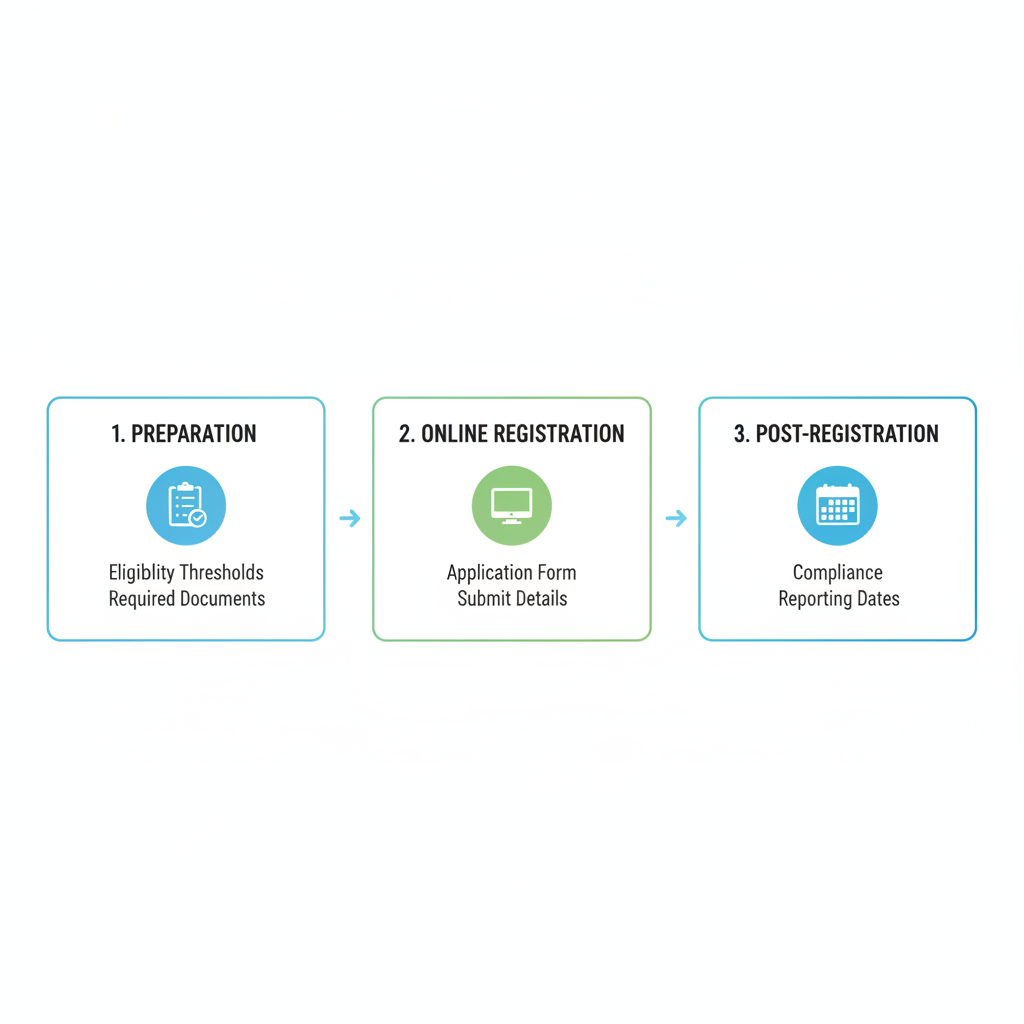
Step-by-step guide to BC PST registration process for ecommerce sellers
The visual above summarizes the journey, helping you visualize progress from preparation onward.
Registering Online via eTaxBC Platform
The online tax registration guide for Surrey businesses simplifies PST registration BC ecommerce through the secure eTaxBC platform. Access it via the BC government’s website, requiring a BCeID account for login‖create one if needed using your email and personal details.
- Log in and start application: Navigate to the PST registration section, select “New Registrant,” and enter your business details, including the Surrey mailing address and effective registration date (usually immediate for new sellers).
- Complete form fields: Input your CRA business number, estimated annual taxable sales (e.g., from Shopify reports), and specify ecommerce as the business type. Quote the form’s sales volume field directly: it asks for “total value of taxable goods and services sold in BC,” adapting for online metrics like order values.
- Submit and review: Double-check for errors, such as mismatched postal codes for Surrey addresses, which can trigger validation issues‖verify using Canada Post tools if needed. Approval typically arrives in 5-10 business days via email, providing your PST number.
This process ensures quick setup for ecommerce provincial tax filing. Troubleshooting tip: If login fails, reset your BCeID password promptly to stay on track.
Post-Registration Obligations and Setup
Once approved, BC sales tax registration ecommerce shifts to fulfillment and integration. Your PST number activates collection and remittance duties, starting from the registration date.
- Integrate PST number: Update invoicing templates and ecommerce platforms like Shopify to apply the 7% PST rate automatically on taxable items. This ensures compliance for sales to British Columbia customers.
- Handle remittances and filing: Remit collected PST monthly if sales exceed $25,000 quarterly, or quarterly otherwise‖first due date aligns with your fiscal period end, often 30 days post-quarter. File returns electronically via eTaxBC, reporting net tax payable.
- Set up ongoing compliance: Connect with tools for automated tracking, and monitor for changes like rate adjustments. For GST/PST combos, align federal and provincial filings to avoid double-reporting.
Maintaining these obligations keeps your Surrey operations audit-ready. For seamless integration, especially with US nexus complexities, partnering with experts ensures accuracy and saves time.
Proven Strategies for PST Compliance in Ecommerce
Once registered for provincial sales tax, ecommerce sellers in Surrey can sustain compliance through targeted strategies that address ongoing challenges. These practices draw from established guidelines, including those outlined in the official Provincial Sales Tax resources from the BC government, ensuring businesses avoid penalties while scaling operations. For comprehensive insights, explore the canada sales tax guide to align with broader Canadian tax frameworks. With Transcounts.com’s technology-driven services, such as automated dashboards and integrations, maintaining accuracy becomes seamless for growing ventures in British Columbia.
Monitoring Sales and Nexus Thresholds
Effective tracking forms the cornerstone of compliance strategies for Surrey ecommerce, helping businesses stay ahead of nexus thresholds. The BC PST requires monitoring sales volume in the province, with registration mandatory once exceeding $10,000 annually. For BC PST registration for ecommerce in Surrey, British Columbia, start by implementing monthly reviews using cloud-based tools that aggregate data from platforms like Shopify or Amazon.
Here are key best practices:
- Set up automated alerts: Configure dashboards to flag when sales approach the $10,000 threshold, allowing timely adjustments to registration status and preventing retroactive liabilities.
- Track geographic sales: Use analytics to monitor BC-specific transactions, especially for growing Surrey businesses expanding into digital or cross-border sales.
- Conduct quarterly audits: Review nexus triggers, including digital downloads taxable under PST, to ensure ongoing provincial tax management aligns with revenue growth.
Failing to track nexus can lead to retroactive taxes and fines, so proactive monitoring safeguards your operations. Transcounts offers custom KPI add-ons for real-time visibility, reducing manual effort.
Integrating Tax Tools with Ecommerce Platforms
Seamless synchronization between tax software and sales channels is essential for PST registration BC ecommerce, automating calculations and filings to minimize errors. British Columbia’s rules demand accurate PST application on taxable goods, and integrations simplify this for platforms like Shopify or Amazon Seller Central.
Recommended steps include:
- Choose compatible tools: Opt for solutions like A2X for Amazon PST reconciliation, which pulls data directly into QuickBooks or Xero for automated matching.
- Enable real-time syncing: Connect your ecommerce platform to tax engines that apply BC rates dynamically, covering both physical and digital products.
- Test for accuracy: Regularly validate outputs against the government’s remittance frequencies‖monthly, quarterly, or annually‖to match your sales volume.
These integrations support compliance strategies for Surrey ecommerce by handling complexities like software updates taxable under PST. With Transcounts.com’s partnerships, such as with Plooto and TaxJar, businesses achieve hassle-free automation tailored to their needs.
Handling Audits and Ongoing Reporting
Preparation for audits and consistent reporting underpins BC sales tax registration ecommerce, with the BC tax authority requiring robust documentation. Retain records for seven years, including invoices, receipts, and sales reports, as per official PST guidelines, to facilitate smooth inquiries.
Best practices to adopt:
- Organize digital files: Use cloud storage for categorized records, making it easy to retrieve data during audits or notices from the Ministry of Finance.
- Prepare response checklists: Document remittance deadlines specific to Surrey operations, such as quarterly filings for mid-sized sellers, and maintain proof of payments.
- Schedule internal reviews: Annually assess reporting accuracy, addressing any discrepancies in taxable sales to uphold ongoing provincial tax management.
Audits often focus on nexus verification and digital taxability, so organized systems prevent disruptions. Transcounts provides audit-ready documentation and support, ensuring your ecommerce venture in British Columbia remains compliant and confident.
Securing Your Ecommerce Future with BC PST Registration for Ecommerce in Surrey, British Columbia
Mastering BC PST registration for ecommerce in Surrey, British Columbia, is essential for small businesses navigating provincial sales tax obligations. Key triggers include reaching $10,000 in annual sales or establishing a physical presence in the province, prompting prompt registration to avoid hefty penalties. The process simplifies through eTaxBC, allowing seamless online submission alongside GST dual-registration needs for comprehensive federal-provincial compliance. Best practices involve regular monitoring of sales thresholds and integrating automated tools for accurate remittance. Referencing official GST/HST guidelines from the Canada Revenue Agency, combining these with PST ensures holistic tax management, emphasizing timely filings to prevent interest accrual and audits.
Transcounts.com excels in supporting PST registration BC ecommerce and BC sales tax registration ecommerce, offering end-to-end solutions that encompass bookkeeping, payroll automation, and fractional CFO insights tailored for Surrey sellers. Our team handles complex setups, including the gst registration checklist, to streamline your operations and foster sustained tax compliance for Surrey sellers.
To future-proof ecommerce tax strategies in British Columbia, consult Transcounts professionals for personalized guidance on your Surrey-specific needs. Take the next step today:
- Review your sales volume against registration thresholds
- Schedule a compliance audit with our experts
- Implement monitoring systems for ongoing success
Empower your business with proactive compliance and watch it thrive.