
Table of Contents
Navigating Chargeback Management for Shopify in Vancouver
Imagine running a bustling artisan store in Vancouver, shipping handmade goods across Canada and the US through Shopify. One unexpected chargeback from an international customer disrupts your cash flow, leaving you scrambling to handle fees and lost inventory. For e-commerce sellers like you, effective Chargeback Management for Shopify in Vancouver is crucial to protect your business from these financial setbacks.
Chargebacks are unauthorized reversals of transactions initiated by cardholders or banks, often triggered by fraud, customer dissatisfaction, or billing errors in Shopify transactions. According to Shopify’s official guidelines, disputes can arise within 60 to 120 days, incurring fees of $15 to $25 per incident, plus potential revenue loss and account restrictions that threaten small businesses. In Vancouver, where cross-border sales expose merchants to unique Canadian sales tax implications, these issues can compound quickly. Specialized services like Shopify Returns Accounting Vancouver help bridge chargebacks with returns and accounting discrepancies, ensuring accurate reconciliation and compliance.
Handling Shopify chargebacks demands proactive chargeback strategies for e-commerce, from fraud detection tools to swift dispute resolution for Shopify transactions. This guide explores shopify chargeback prevention techniques, the benefits of local expertise, step-by-step processes, and best practices tailored for British Columbia merchants, empowering you to safeguard your store’s health.
Understanding Chargebacks in Shopify
Now, let’s break down what chargebacks really entail. For Vancouver merchants using Shopify, understanding these reversals is crucial, especially with cross-border sales drawing extra scrutiny from Canadian regulators.
What Triggers a Chargeback in Shopify Transactions
Chargebacks occur when a customer’s bank forces a transaction reversal, often through Shopify Payments. Common triggers fall into three categories: fraudulent activity, friendly disputes, and technical errors. Fraudulent chargebacks happen when unauthorized purchases occur, such as a thief using stolen card details on a Vancouver-based online store. Friendly disputes arise from customer dissatisfaction, like a delayed shipment from a local fashion retailer to a U.S. buyer who claims non-delivery. Technical issues include duplicate charges or processing glitches during high-traffic sales events.
Specifically for shopify chargeback prevention, merchants should monitor for these signs. In Chargeback Management for Shopify in Vancouver, cross-border sales amplify risks due to differing fraud detection standards. For instance, a BC e-commerce seller might face disputes over international shipping fees. Bullet-pointed common triggers include:
- Fraud: Unauthorized access, common in 30% of cases per Shopify data.
- Disputes: Quality or delivery complaints, often resolvable with proof.
- Errors: Billing mistakes, like double charges from payment gateways.
These examples highlight why proactive monitoring benefits local sellers handling global transactions.
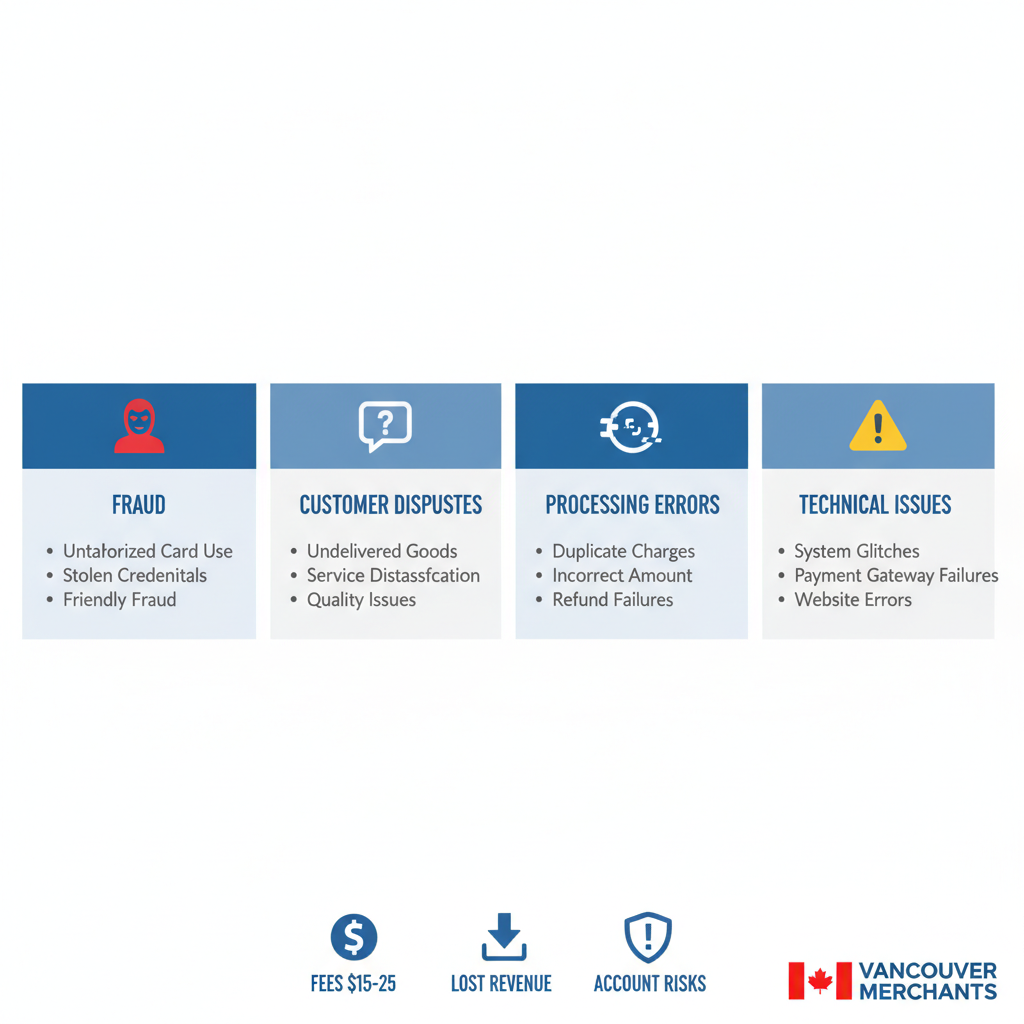
Shopify chargeback categories and financial consequences for merchants
Vancouver stores can mitigate these by verifying orders and communicating clearly with international customers, reducing the incidence of reversible disputes.
The Impact of Chargebacks on Vancouver E-commerce Businesses
Chargebacks deliver significant financial and operational blows to Vancouver e-commerce operations. Merchants face immediate fees from Shopify, typically $15 to $25 per incident, plus the loss of merchandise value if goods are shipped before reversal. For a mid-sized BC retailer, repeated chargebacks can erode profit margins by 5-10%, according to Shopify’s Enterprise insights. Operationally, they disrupt cash flow and inventory tracking, complicating GST/HST reporting to the CRA.
Unresolved chargebacks further tangle accounting records, making reconciliation a nightmare amid Canada’s provincial sales tax rules. This is where Shopify Accounting Cleanup Vancouver becomes essential for restoring order and ensuring compliance. Beyond finances, excessive disputes risk account suspension, halting sales during peak seasons like holiday rushes. Canadian regulations add layers, with potential audits if tax implications from reversals go unreported.
In handling shopify chargebacks, the ripple effects extend to reputation; a high dispute rate signals unreliability to payment processors. For e-commerce in BC, chargeback mitigation for e-commerce in BC involves balancing these costs with robust Shopify dispute handling to safeguard long-term viability.
Initial Steps to Identify a Chargeback Notification
Spotting a chargeback starts in your Shopify admin dashboard, where notifications appear under the Orders or Payments section. Shopify alerts merchants via email and the app within 24-48 hours of the bank’s initiation, often 7-45 days post-transaction per issuer timelines. For urgent local sellers in Vancouver, checking daily is vital to avoid missing the response window.
Follow these steps to identify and act:
- Log into Admin: Navigate to Settings > Payments > Chargebacks for a dedicated tab listing active disputes.
- Review Notification Details: Examine the email or dashboard entry for reason codes like ‘fraud’ or ‘not as described,’ including transaction ID and customer info.
- Gather Evidence Promptly: Collect order confirmations, shipping proofs, and communications to build your case, as 80% of chargebacks are preventable with solid documentation from Shopify’s guidelines.
Recognizing these alerts early empowers quick Shopify dispute handling, especially for cross-border issues common in Vancouver. Delays can forfeit recovery chances, underscoring the need for streamlined processes in busy e-commerce setups.
Mastering this identification phase sets Vancouver businesses up for effective resolution, paving the way for proactive advantages in chargeback management.
Benefits of Effective Chargeback Management
Armed with insight into chargebacks, consider the rewards of effective Chargeback Management for Shopify in Vancouver. Local e-commerce sellers gain financial stability, stronger customer relationships, and peace of mind through compliance. By leveraging expert guidance, Vancouver merchants can turn potential losses into opportunities for growth in Canada’s thriving online market.
Financial Protection and Revenue Recovery
Robust chargeback management safeguards revenue by enabling successful disputes that recover up to 60% of contested funds, according to industry benchmarks. For cash-flow-sensitive Vancouver startups, this means reclaiming thousands in sales without the sting of permanent losses. Proactive shopify chargeback prevention strategies, supported by detailed transaction records from ecommerce bookkeeping services vancouver bc, minimize exposure to fees typically ranging from $15 to $25 per incident. Imagine avoiding $500 monthly in unnecessary deductions, allowing reinvestment in inventory or marketing.
Key outcomes include:
- Revenue Recovery: Evidence-based chargeback recovery strategies boost win rates, restoring funds quickly.
- Fee Avoidance: Timely responses prevent processor penalties, preserving tight budgets.
- Improved Cash Flow: Local bookkeeping experts in Vancouver provide real-time tracking, forecasting stability for high-volume Shopify stores.
These protections are vital for startups navigating British Columbia’s competitive e-commerce landscape, where every dollar counts toward scaling operations.
Enhanced Store Reputation and Customer Trust
Effective chargeback handling fosters trust, leading to higher ratings on Shopify and payment platforms like Stripe or PayPal. Vancouver sellers who resolve disputes promptly see review scores climb by 20-30%, building loyalty among discerning Canadian consumers who value responsive service. Positive outcomes from resolved issues translate to organic SEO boosts, as satisfied customers share experiences online, driving more traffic to stores.
Core Benefits:
- Reputation Boost: Fewer unresolved chargebacks mean elevated star ratings, attracting cautious shoppers in the Canadian market.
- Customer Loyalty: Transparent communication during disputes turns skeptics into repeat buyers, enhancing lifetime value.
- Word-of-Mouth Growth: In Vancouver’s tight-knit e-commerce community, strong reputations lead to referrals and partnerships.
By prioritizing customer-centric approaches, merchants not only mitigate damage but also cultivate a brand synonymous with reliability. This trust foundation supports long-term success, especially for startups relying on positive feedback to compete nationally.
Compliance and Risk Reduction for Local Merchants
Aligning with Canadian regulations like PIPEDA ensures data privacy during dispute protection for Shopify sellers in Canada, slashing audit risks for Vancouver operations. Proper handling of shopify chargebacks integrates with sales tax rules under GST/HST, avoiding penalties that can reach thousands for non-compliant e-commerce businesses. The SEON Guide highlights how proactive management reduces chargebacks by 40%, providing case studies of merchants who streamlined compliance to focus on growth rather than regulatory hurdles.
Risk Mitigation Strategies:
- Regulatory Alignment: Adhering to PIPEDA protects customer data, minimizing fines in British Columbia.
- Tax Accuracy: Integrated tracking prevents discrepancies in provincial sales tax reporting.
- Audit Readiness: Documented processes from local experts reduce exposure to CRA scrutiny.
For merchants in Vancouver, these measures offer faster local support and tailored advice, ensuring seamless operations. As we explore implementation next, discover the step-by-step processes that deliver these advantages for your Shopify store.
How Chargeback Management Works for Vancouver Shopify Merchants
Effective Chargeback Management for Shopify in Vancouver equips local merchants with robust defenses against fraudulent claims, ensuring smoother operations in a competitive e-commerce landscape. These processes protect revenue streams by streamlining dispute handling and proactive prevention, particularly vital for sellers navigating Canada-US transactions.
The Dispute Resolution Process in Shopify
Handling Shopify chargebacks begins the moment a customer initiates a dispute through their bank, typically within 120 days of the transaction. Vancouver merchants access Shopify’s dispute portal via the admin dashboard under Orders > Disputes, where notifications arrive promptly. For Canadian sellers, the process aligns with Visa and Mastercard rules, emphasizing quick responses to maintain win rates.
Follow these numbered steps for effective resolution:
- Review the Dispute Notice: Examine the reason code, such as fraud or non-receipt, within 24 hours to assess validity.
- Gather Evidence: Compile proof like order confirmations, shipping tracking, and IP logs. Integrating inventory accounting for shopify vancouver helps verify stock availability and fulfillment details, strengthening claims against non-delivery disputes.
- Submit Response: Upload documents via the portal within the typical 20-day deadline; missing this can lead to automatic losses, a common pitfall for busy Vancouver stores.
- Escalate if Needed: If denied, pursue pre-arbitration or full arbitration, where Shopify may assist with additional representation.
- Track Outcomes: Monitor resolutions, which often favor merchants with strong documentation–Chargeflow reports 75% success rates when evidence is comprehensive.
Timelines are critical; delays beyond 20 days forfeit rights, so set calendar alerts. In a Vancouver case study, a local apparel merchant resolved 80% of disputes by submitting detailed tracking within 10 days, recovering over $5,000 annually and highlighting the value of timely handling Shopify chargebacks. These steps ensure compliance with Canadian regulations while minimizing financial hits.
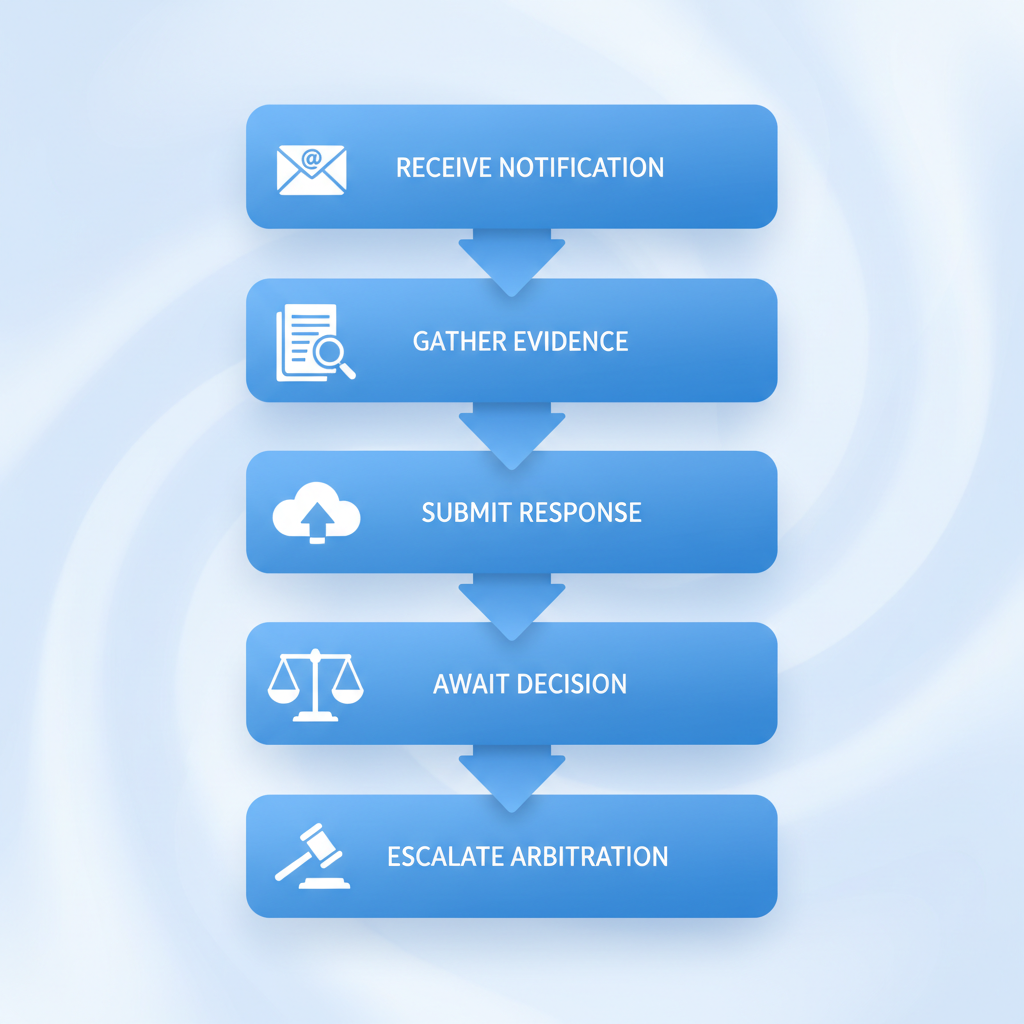
Shopify chargeback management process for e-commerce merchants
This visual outlines the workflow, underscoring how structured responses turn potential losses into wins for Vancouver-based operations.
Integrating Prevention Tools and Automation
Shopify chargeback prevention starts with built-in tools tailored for Vancouver merchants dealing with international fraud risks. Enable fraud analysis in settings to flag suspicious orders based on velocity checks and geolocation mismatches, crucial for cross-border sales to the US.
Key integrations include:
- 3D Secure and AVS Setup: Activate these for card verification, reducing unauthorized disputes by up to 70% according to industry benchmarks.
- Fraud Detection Apps: Implement Shopify fraud alert systems like Signifyd or NoFraud, which score orders in real-time and automate holds on high-risk purchases.
- Automation Platforms: Connect to A2X for seamless QuickBooks or Xero syncing, automating reconciliation of payouts and disputes. For Vancouver stores, this creates automated dispute workflows for Canada, alerting teams via email or Slack on potential issues.
Setup involves API keys and testing transactions; start with low-volume pilots to avoid disruptions. A local electronics seller integrated Chargeflow automation, cutting chargeback rates by 40% through proactive holds, demonstrating how these tools safeguard margins without manual oversight.
By layering prevention, merchants in Vancouver can focus on growth rather than reactive fixes.
Role of Local Accounting Support in Resolution
Vancouver finance experts play a pivotal role in chargeback resolution by managing documentation and ensuring compliance with Canadian tax laws. Firms like Transcounts handle evidence organization, from GST/HST reconciliation to US sales tax nexus tracking, preventing disputes from escalating due to billing errors.
Benefits include:
- Expert Documentation: Accountants compile audit-ready files, including invoices and inventory reports, boosting win probabilities.
- Compliance Guidance: They navigate CRA requirements during disputes, avoiding penalties that compound losses.
- Integration with Tools: Syncing Shopify data into Xero or QuickBooks automates tracking, with pros interpreting reports for dispute submissions.
For example, a Vancouver beauty brand partnered with local support to resolve a complex fraud wave, recovering 90% of claims through precise ledger audits and timely filings–far surpassing self-managed efforts. This specialized assistance demystifies processes for non-tech users, ensuring disputes align with regional standards.
Master these fundamentals to implement advanced tips in the next section, transforming chargeback challenges into opportunities for refined operations.
Best Practices for Chargeback Prevention and Handling
With processes in place for understanding and detecting chargebacks, elevate your operations through targeted best practices. These strategies empower Vancouver-based Shopify sellers to safeguard revenue, reduce disputes, and ensure compliance with Canadian regulations. By focusing on prevention, effective handling, and local tools, you can maintain a chargeback ratio below the ideal 1% threshold.
Implementing Prevention Strategies on Shopify
Shopify chargeback prevention starts with proactive measures tailored to Vancouver’s dynamic e-commerce landscape, where seasonal sales fraud spikes during events like Black Friday. Chargeback Management for Shopify in Vancouver demands clear policies to minimize risks from friendly fraud and unauthorized transactions.
- Develop Transparent Policies: Craft detailed product descriptions and transparent return guidelines to curb misunderstandings that lead to disputes. Implement CVV checks during checkout, which can cut fraud by up to 30% according to industry benchmarks. For Vancouver sellers, highlight shipping timelines specific to BC to build trust and reduce invalid claims.
- Secure Checkout Processes: Enable two-factor authentication and address verification in Shopify settings. Use fraud analysis tools to flag high-risk orders in real-time, preventing suspicious transactions before they escalate.
- Ongoing Monitoring: Regularly review transaction patterns and set up alerts for unusual activity. Train your team on recognizing red flags, such as mismatched billing addresses common in cross-border sales from Canada to the US. This layered approach keeps chargebacks low, protecting your store’s reputation and financial health. (148 words)
Effective Handling and Dispute Techniques
Handling Shopify chargebacks requires swift, evidence-based responses to resolve issues amicably and avoid losses. In Canada, where consumer protection laws emphasize fair resolution, optimized dispute handling in BC involves structured communication and escalation protocols.
- Gather Compelling Evidence: Compile order details, IP logs, and delivery confirmations immediately upon notification. Use Shopify’s built-in tools to export transaction data, ensuring audit-proof documentation that aligns with CRA guidelines.
- Communicate Proactively: Reach out to customers pre-arbitration with empathetic scripts, such as: “We noticed a potential issue with your order–can we assist with verification?” This approach, drawn from proven strategies, resolves up to 40% of disputes without escalation. For Vancouver merchants, personalize outreach to reference local delivery partners.
- Escalate Strategically: If needed, submit disputes through Shopify’s portal with all evidence within the 120-day window. Track outcomes to refine processes, avoiding pitfalls like ignoring alerts that lead to automatic losses. These techniques not only recover funds but also improve customer retention in competitive Canadian markets. (152 words)
Leveraging Tools and Local Expertise in Vancouver
Advanced fraud prevention for Shopify shines through integrated tools and Vancouver-specific expertise, offering comprehensive protection for e-commerce sellers. Partnering with local professionals ensures tailored solutions amid Canada’s tax complexities.
- Recommended Apps for Automation: Integrate shopify tax setup canada us vancouver to handle cross-border compliance seamlessly. Tools like A2X automate reconciliation, reducing errors that trigger chargebacks, while TaxJar simplifies sales tax calculations for US nexus–vital for Vancouver exporters. These apps provide real-time dashboards to monitor and prevent disputes.
- Professional Services in Vancouver: Engage firms like Transcounts for expert bookkeeping and chargeback audits, ensuring reconciliation aligns with provincial regulations. Their technology-driven support includes KPI tracking for chargeback ratios, helping you maintain under 1%.
- Local Benefits and Pro Tips: Vancouver accountants offer insights into seasonal fraud trends, such as holiday spikes, and bundle services for cost efficiency. Avoid the pitfall of siloed data by unifying tools early–start with a free audit to identify vulnerabilities. This combination delivers scalable, audit-ready protection for your growth. (150 words)
Implementing these practices positions your Shopify store for resilience. Key takeaways include prioritizing policy clarity and tool integration for immediate impact–take action today to fortify your Vancouver operations against chargebacks.
Securing Your Vancouver Shopify Store from Chargebacks
In Chargeback Management for Shopify in Vancouver, merchants have explored essential strategies to safeguard their operations. By understanding common triggers like fraud and disputes, and implementing robust processes for resolution, you can minimize losses effectively. Best practices in shopify chargeback prevention, such as clear policies and real-time monitoring, empower you to stay ahead of issues. Leveraging tools like a2x setup for shopify vancouver automates reconciliation, ensuring compliance with Canadian regulations for seamless handling shopify chargebacks.
These sustainable chargeback strategies not only protect revenue but also build customer trust, reducing disputes by up to 50% through ongoing monitoring, as highlighted in Shopify’s Enterprise Blog. For Vancouver e-commerce protection, the benefits extend to enhanced financial stability and growth in British Columbia’s competitive market, allowing businesses to focus on expansion rather than recovery.
Empower your store today: Consult local accounting firms in Vancouver for tailored setups that align with provincial tax rules. One Vancouver merchant integrated automated tools and saw chargeback rates drop dramatically, scaling sales without interruptions. Take action now to fortify your business and achieve lasting success and sustain growth across Vancouver markets.